HoneyGiRead
A gamified manga reading platform where reading, collecting and supporting an author are one and the same gesture
With Poissonlabo (opens in a new tab) · Art and animation
- iOS app
- Android app
- Website
- Apple Watch
- Apple Vision Pro
- Widgets and Live Activities
The Apple Watch app
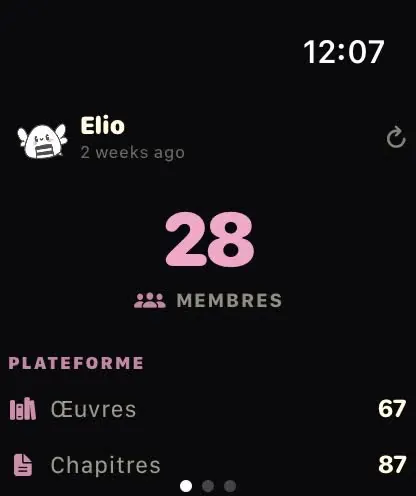 App screenshots
The Apple Vision Pro app
 App screenshots
The website
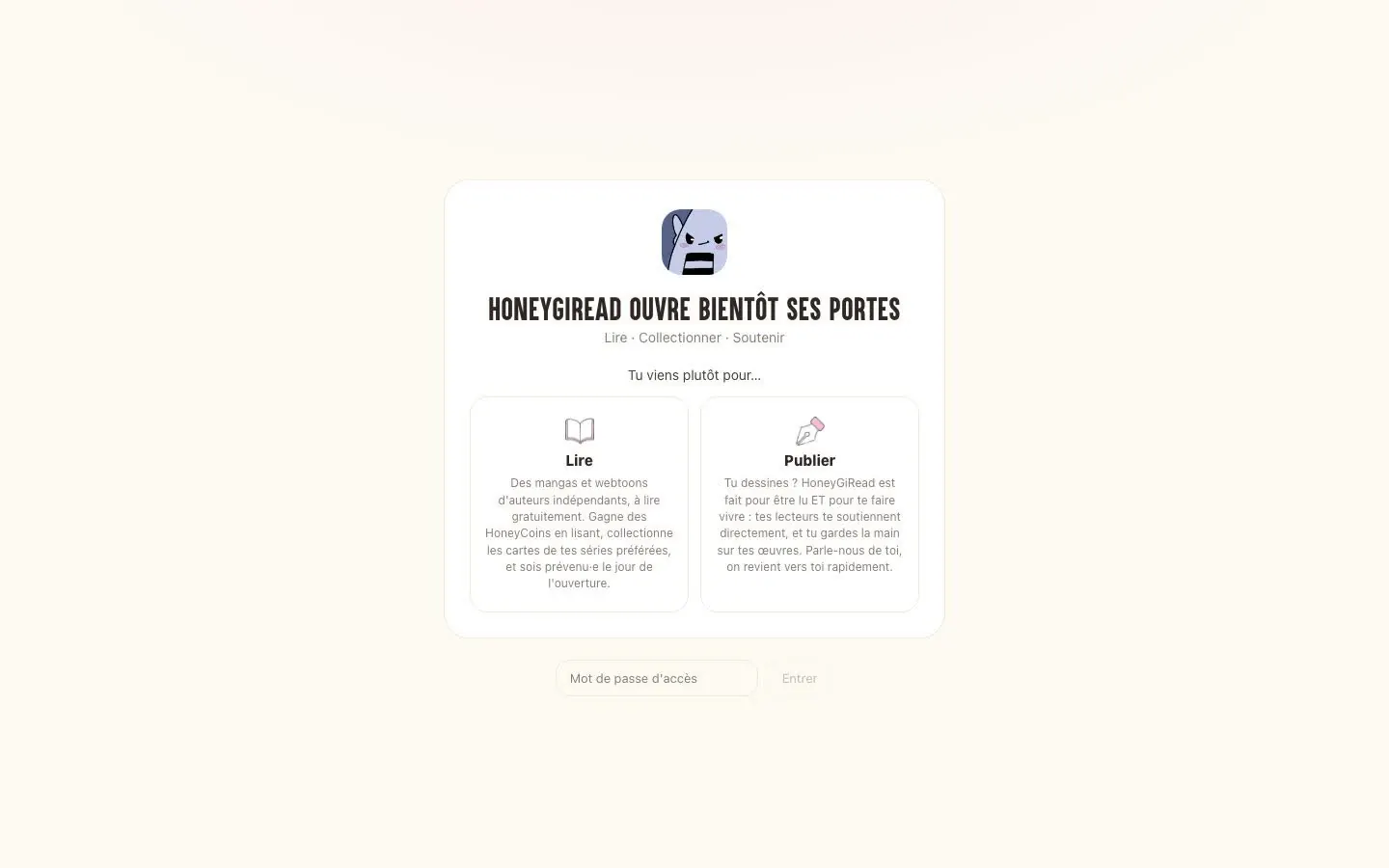
Screen by screen
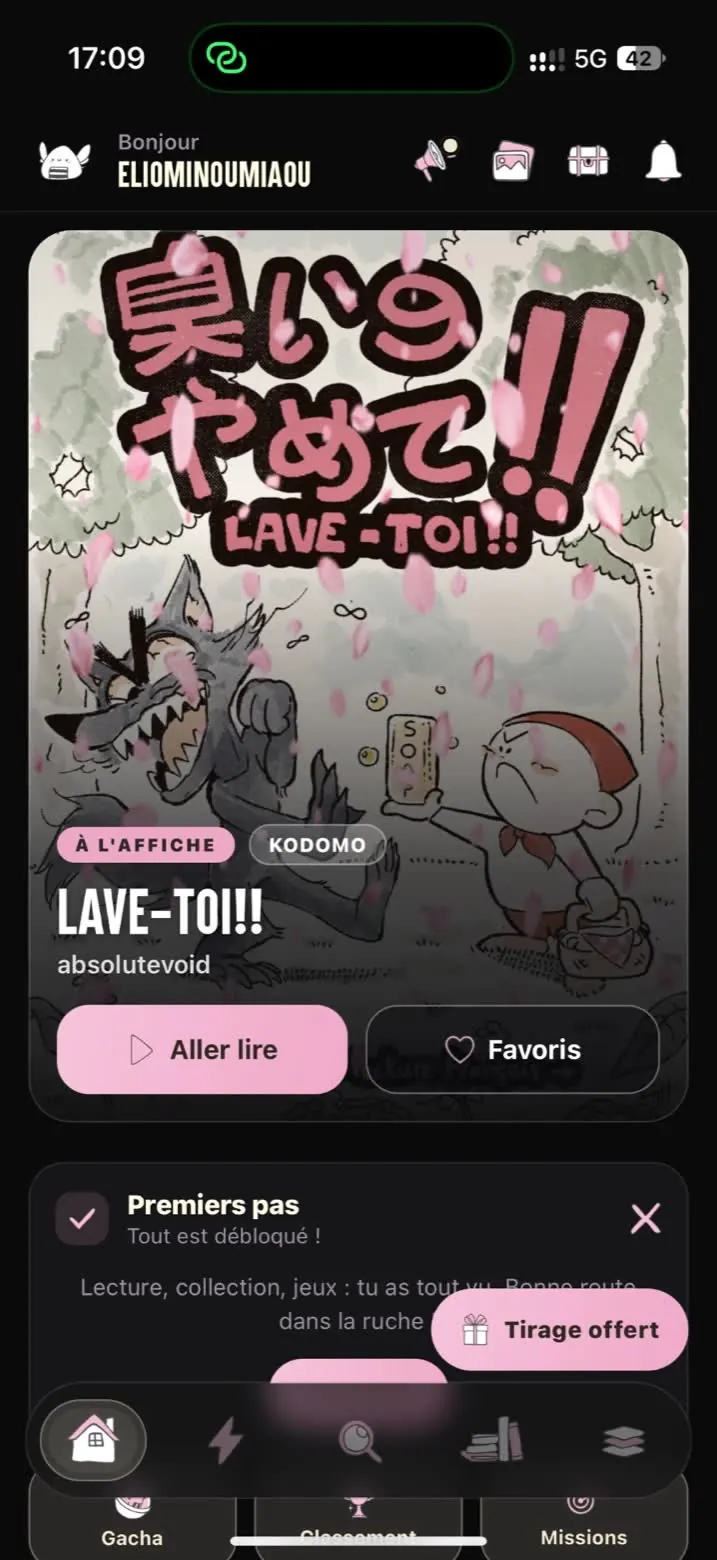
01Home: the featured work, and the first steps that guide a new reader.
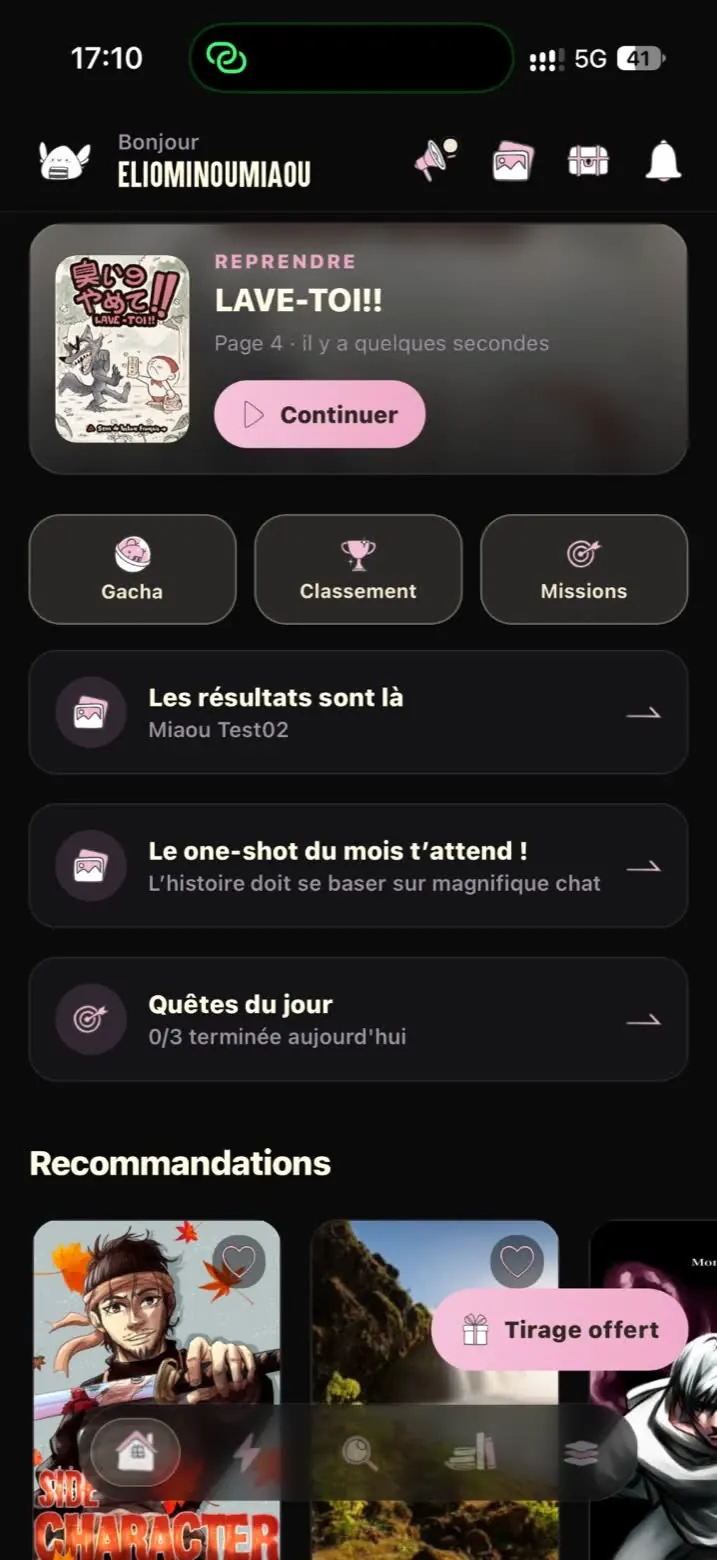
02Resume reading, the gacha, the ranking, the missions and the daily quests.
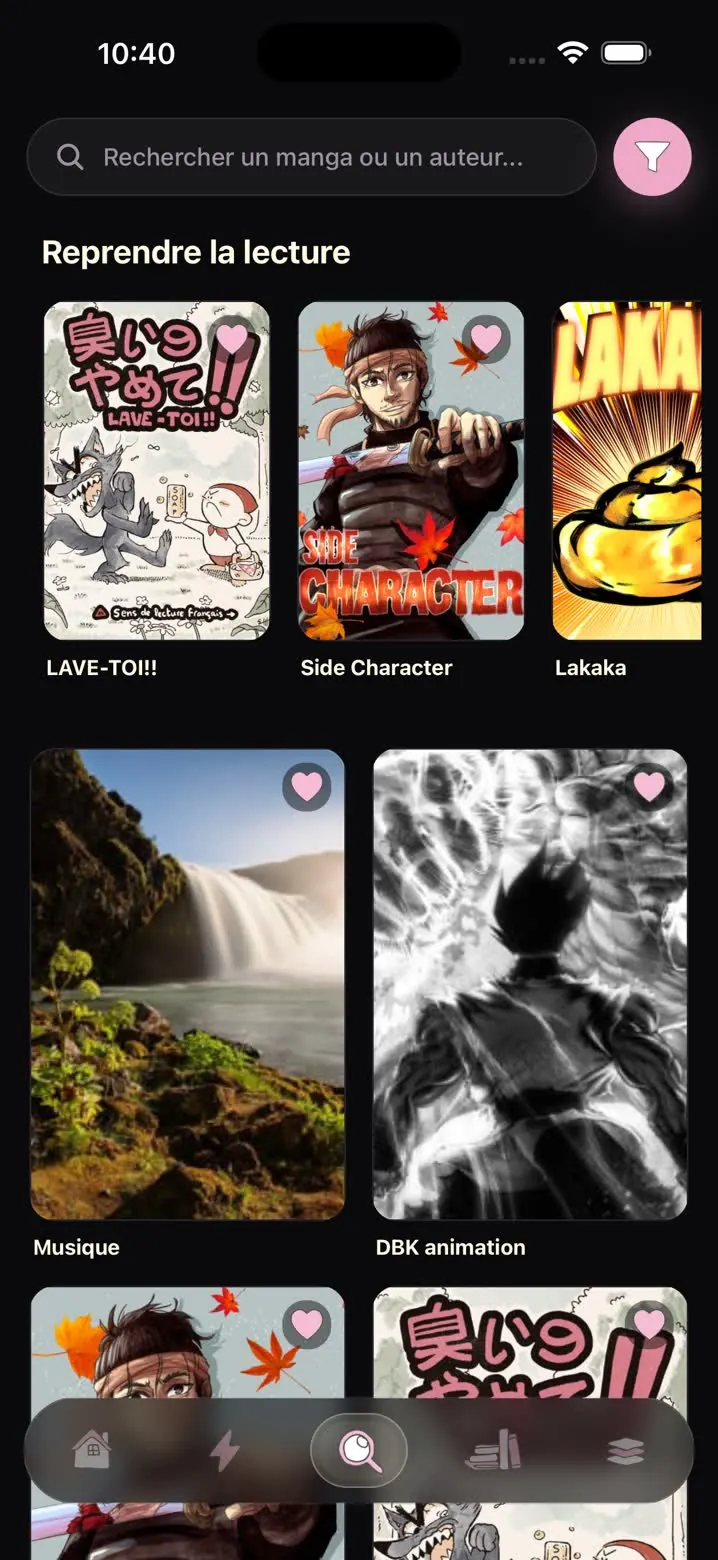
03The reader, page by page or in webtoon scroll.
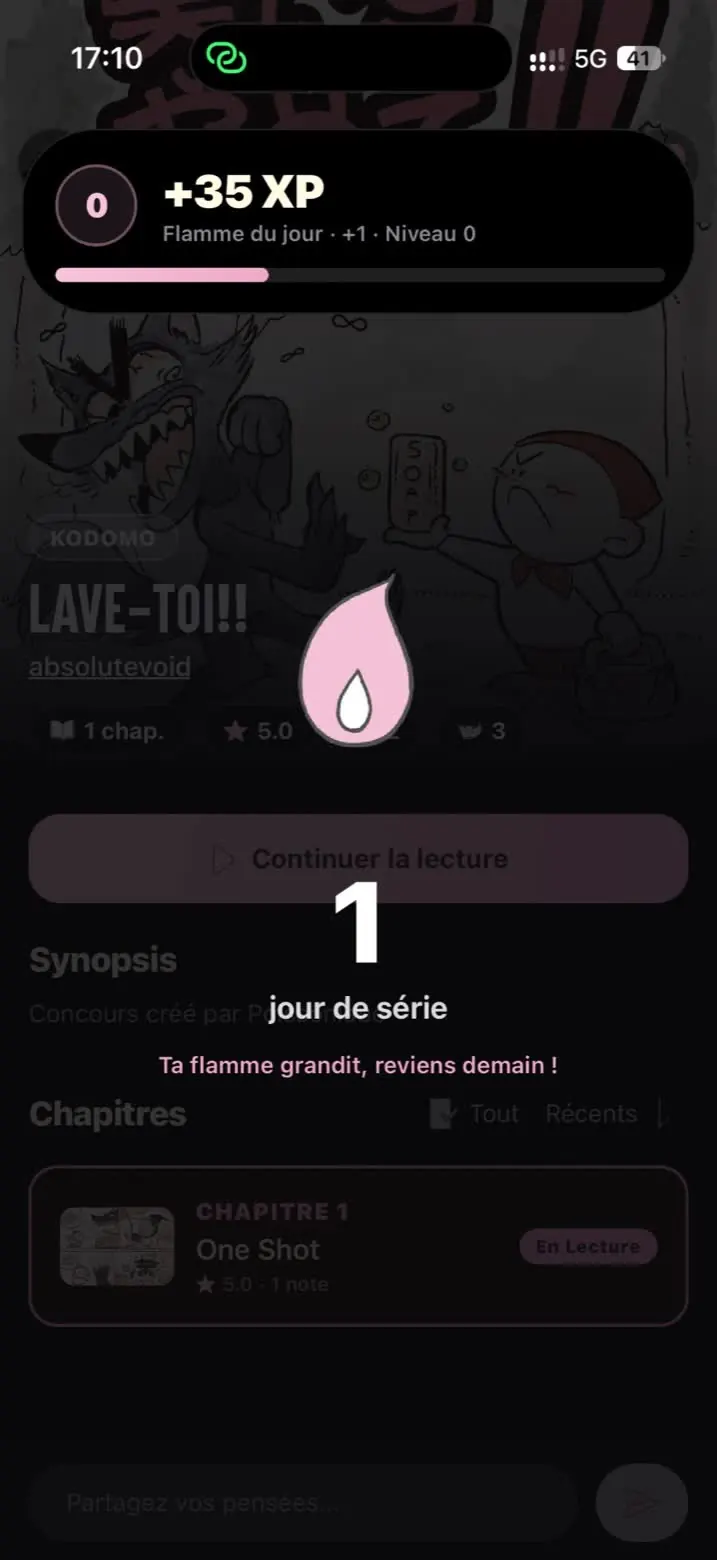
04The flame: every day of reading grows the streak and earns XP.
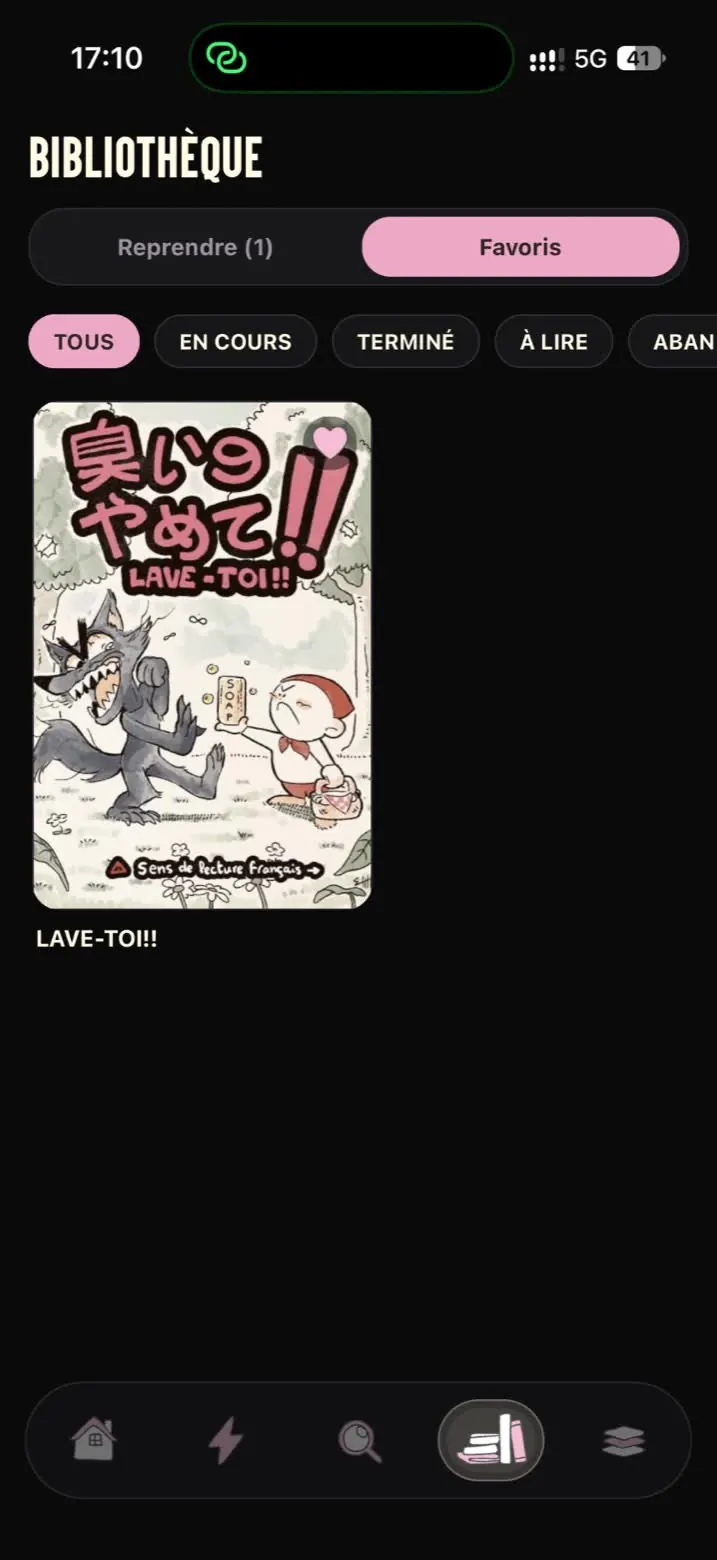
05The library: resume, favourites, in progress, finished, to read.
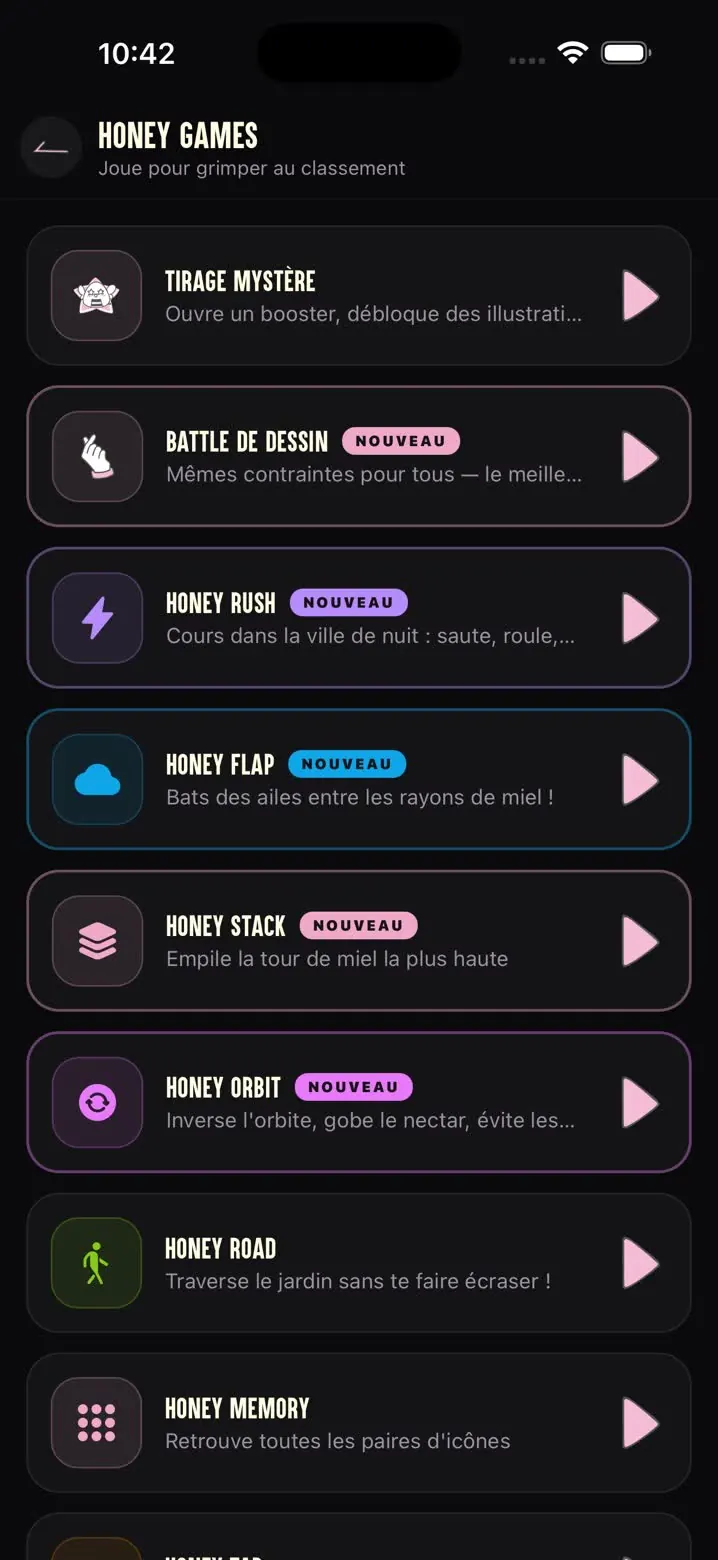
06The mini-games, drawn in Skia at 60 frames per second.
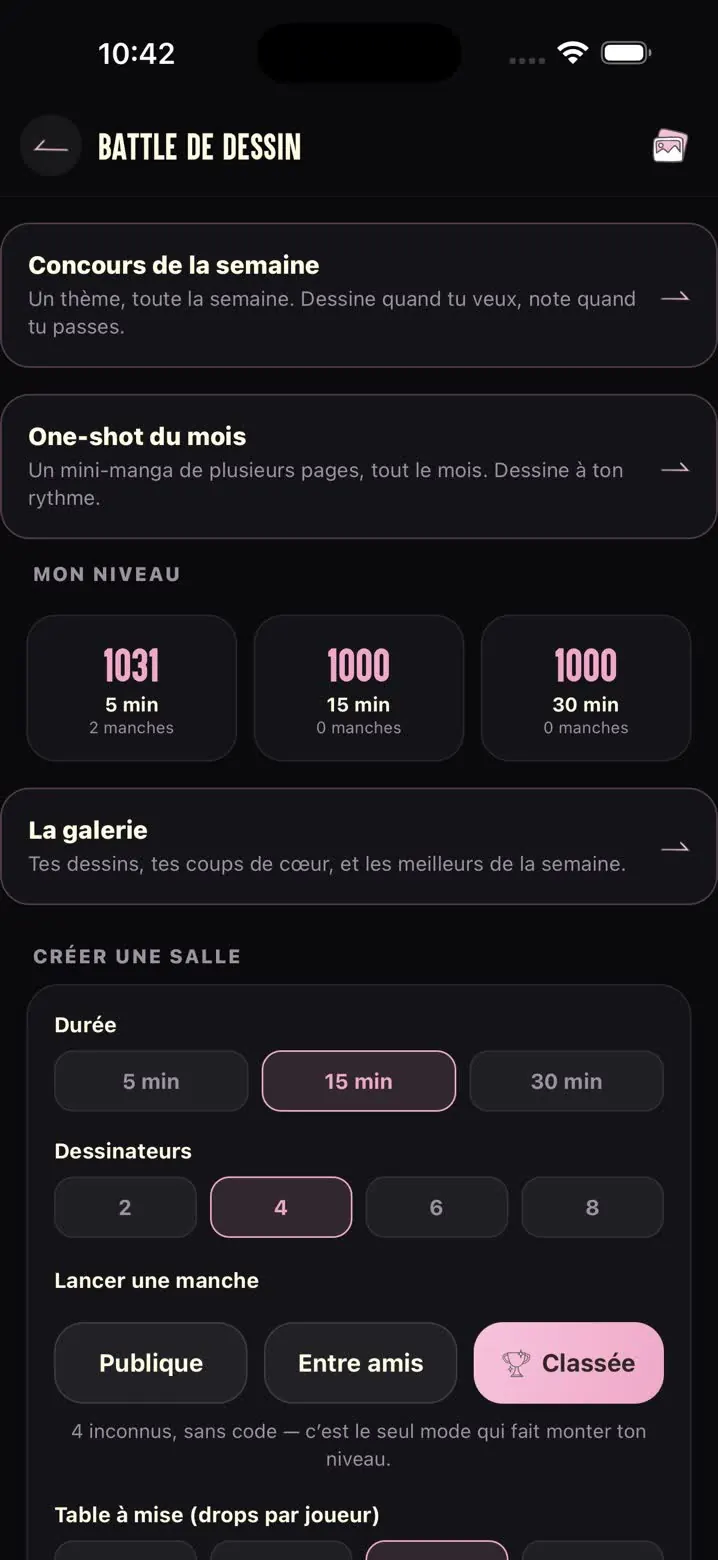
07The drawing battle between artists.
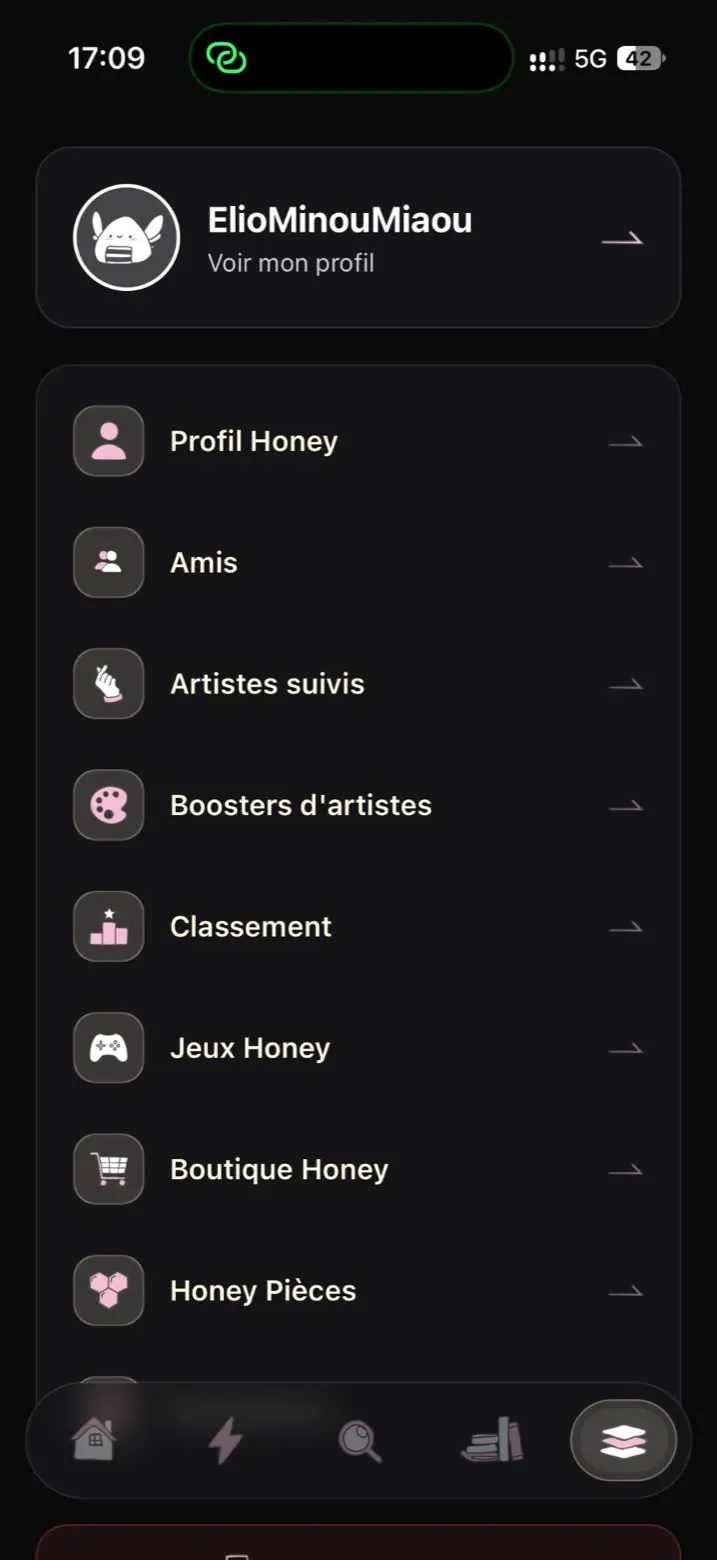
08The menu: profile, friends, followed artists, boosters, ranking, games, shop, coins.
Role
Founder and full-stack developer
A gamified manga reading platform for independent authors and their readers: a polished reader, a card collection to complete, nine mini-games, a drawing Battle, and a two-currency economy that genuinely flows back to authors, all the way to a bank transfer. An iOS and Android app, a website with its back-office, an API, an Apple Watch app and an Apple Vision Pro app, designed, built and operated end to end, from the native Swift modules to the AWS infrastructure.
What's inside
- React Native / Expo app: 121 screens, 6 languages, webtoon and paged reader, offline mode.
- Skia mini-games at 60 frames per second, card collection.
- Live Activities, Dynamic Island, widgets, Apple Watch app, 5 native Swift modules.
- NestJS / MongoDB backend: 48 modules, 446 routes, Sign in with Apple and Google.
- In-app purchases, author payouts, advertising with GDPR consent.
- AWS and Terraform infrastructure, CI/CD on GitHub Actions, hosting cost divided by three.
- AI-assisted translation, React web back-office.
In detail
01The product
An online manga reader for independent authors and their readers. The bet: a reader who plays, collects and supports stays, and what they spend ends up with the author they read.
Three pillars structure everything, down to the navigation. Read: a catalogue published by the authors themselves, a webtoon, page or double-page reader, a soundtrack per chapter, a reading streak. Collect: a card gacha in expansions, a gallery, trades, nine mini-games and a drawing Battle. Support: a monthly subscription to an author, tips, a share of ad revenue, and a real bank transfer at the end.
Nothing is pirated: every work belongs to an author account that publishes, moderates, translates and earns from it, and can transfer it.
The project is made by two, with Poissonlabo, a lifelong friend: every drawing and every animation is his, along with the app's visual identity, its cards and its mascots.
02Four surfaces, three repositories
A single Apple extension carries every native target: download, Battle lobby and streak Live Activities, an author widget, the Apple Watch app, a Control Center button.
- Mobile app: Expo SDK 52 / React Native 0.76, bare workflow, TypeScript. 168 screens, 134 components. All JavaScript ships over the air, native code through Xcode archives.
- API: NestJS and MongoDB Atlas, 48 controllers, 446 routes, 68 collections. Automatic deployment to AWS App Runner on every push.
- Website: Vite and React, one app that serves the consumer replica, the back-office and an OBS overlay for streamers, plus prerendered SEO pages, one per work. S3 and CloudFront.
- Infrastructure: Terraform for App Runner, S3, CloudFront, backups and budget. The plan is read by hand before every apply.
03The reader and offline mode
Three reading modes, a notched scrubber with page numbers, a segment-based soundtrack with fades and beat quantisation, a translation layer laid over the original page without ever erasing the drawing, and a native secure area that blacks out screenshots of paid content.
A native download engine works in the background and shows its progress as a Live Activity. Readers can cut the network on purpose and keep using what they downloaded.
Discovery is filtered by reading language: home and search only show works actually available in the chosen language. Library and history are never filtered.
04Two currencies, one ledger
HoneyCoins are bought (App Store, Google Play, Premium subscription through RevenueCat) and unlock a chapter, support an author or leave a tip. HoneyDrops are only earned, by playing, quests, the streak and events, and pay for boosters, trades and Battle stakes.
Three red lines never crossed: Drops are never sold, Coins are never converted into Drops, and no cash withdrawal is possible for a player. That is what keeps the Battle a skill contest. A game's difficulty is never adjusted to the stake.
Every movement writes a ledger entry, the wallet carries a version number against concurrent writes, and a purchase shows before it debits: stock, balance, price, remainder.
The paid-reading model, inspired by Piccoma, is decided server-side, work by work: the latest chapters unlock by waiting or paying, the whole back catalogue is free, and public routes never return the pages of a locked chapter.
05Play, collect, Battle
One XP scale for everything: chapter read, work finished, game played, booster, trade, contest, quest, streak, support, comment. Levels follow a quadratic curve and every API response carries the XP gain in a header, so the app shows it without an extra request.
The gacha sorts cards into expansions with rarities, a pity counter, a free daily draw and rates shown before purchase. The nine mini-games run their render loop on the UI thread, in Reanimated and Skia, without a single setState per frame.
The drawing Battle: four artists, the same constraints, a time limit, then an anonymous vote. Four modes, public, friends, ranked with Elo per duration, and staked in Drops. The server pushes the lobby to the lock screen as a Live Activity through APNs, and streamer rooms get a public OBS overlay.
Two automatic fixtures: the weekly contest, opened every Monday by a scheduled job, and the monthly one-shot on the 1st.
06Author space and back-office
An author account publishes works, chapters and volumes, imports pages in bulk from a ZIP, sets a soundtrack, opens a free window, translates chapters, and tracks readers by language and country. Age, gender and geolocation were deliberately left out.
Getting paid: monthly support charged on the 1st, tips, a share of the ad pot split by readership, and withdrawal by bank transfer with an IBAN encrypted at rest, approved by hand. An end-to-end audit found three real-money bugs, since fixed, and these paths are under mandatory tests.
The back-office exists as 42 screens in the app and 27 pages on the web, on the same routes: content, moderation, community, economy, featuring, notifications, operations, events. Six roles, including a moderator deliberately stripped of notifications, accounts and currency, a scope locked by a test that reads the source code.
07Six languages, security, quality
The interface is translated into French, English, Spanish, Italian, German and Portuguese: one dictionary of about 2,700 entries, fallback to French, variable interpolation. Content is translated as a layer over the pages, with bubble detection, on-device Apple translation, and a server queue processed by a local worker.
Ten flaws found and closed, including a paywall enforced only in the app, a payment webhook without a secret, a purchase credited from the client, and a hard-coded Apple review account credited with 5,000 coins. Fourteen scheduled jobs, backups with an automated restore drill, secret scanning on every push.
248 test files, behavioural rather than snapshots, some of which read the source code to lock a decision. TypeScript compilation and green tests on both sides before any release.
Published first on the New Zealand App Store on 2 September 2026, a deliberately contained launch to get the ad network validated before opening France. The beta has since opened in France through TestFlight, alongside New Zealand. Android is waiting for its keys. The next job is the catalogue: translating the works so the app is genuinely usable outside French.